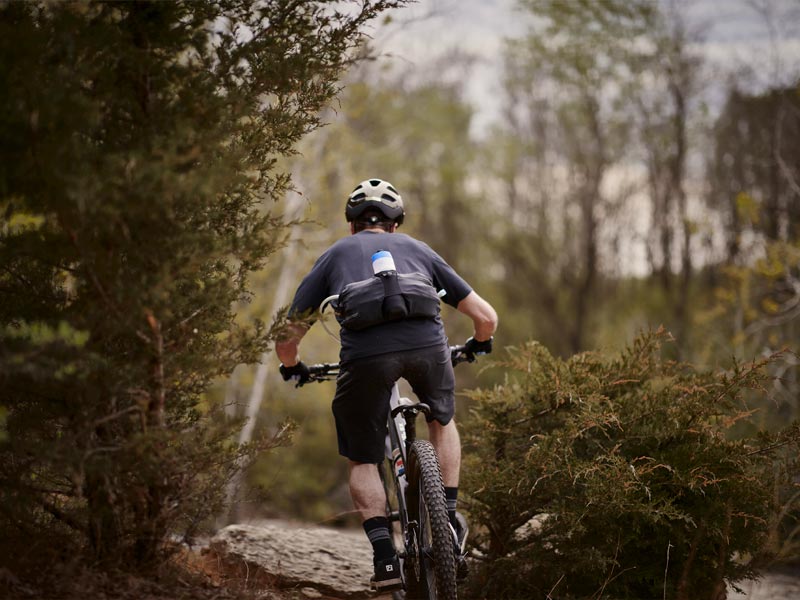
The suspension of a mountain bike absorbs shocks and vibrations caused by riding on uneven terrain. It significantly improves ride comfort, increases traction and gives the rider better control in challenging off-road conditions. The suspension consists of springs and dampers depending on the riding style.
What is mountain bike suspension and why is it important?
The suspension of a mountain bike is a mechanical system that absorbs the shocks between the bike and the rider on the terrain. It consists of springs and dampers that move up and down when the bike hits rocks, roots or other obstacles.
The main function of the suspension is to keep the wheel tyres as close to the ground as possible. When the wheel hits an obstacle, the suspension gives way and allows the tyre to follow the contours of the terrain. This improves grip and manageability significantly compared to a rigid wheel.
Driving comfort is greatly improved as shocks and vibrations are not transmitted directly to the rider. This reduces fatigue on long rides and allows faster progress over varied terrain. The suspension also protects the wheel components from high stress and extends their life.
How does mountain bike suspension work in practice?
Suspension works through two main components: the spring provides the return force and the damper controls the movement. When the wheel hits an obstacle, the spring compresses and absorbs the shock. The damper prevents the spring from bouncing back uncontrollably.
The front fork suspension is the first to react to off-road conditions. When the front wheel hits a rock, the fork compresses to allow the bike to climb over the obstacle. At the same time, the damper slows the fork's return, preventing the bike from jumping into the air.
Full-suspension on mountain bikes the rear wheel has a separate suspension unit. It works on the same principle, but its geometry is more complex. The rear suspension improves grip and comfort, especially when riding up steep hills.
Modern suspension solutions automatically adapt to different conditions. They can be stiff on flat surfaces for efficient pedalling and soft on rough terrain for maximum grip.
In which off-road conditions does suspension help most?
Suspension offers the greatest benefit in technical terrain with lots of rocks, roots and sudden changes in elevation. On rocky trails, the suspension keeps the tyres on the ground and prevents the bike from bouncing from one obstacle to another.
In the north-eastern terrain, suspension is particularly valuable. It allows the wheels to follow the unevenness of the terrain and cross the roots smoothly. Without suspension, the bike easily loses pidon and the driver has to slow down significantly.
At lower speeds, the suspension allows higher speeds to be reached safely. It absorbs the downforce of jumps and keeps the bike under control on steep descents. In speed jumps, suspension is essential for a safe downhill landing.
In wet conditions, the suspension improves grip considerably. It keeps the tyres gripped on slippery terrain and reduces the risk of slipping. On muddy trails, the suspension helps the wheels to penetrate soft spots more effectively.
What is the difference between front and full suspension on a mountain bike?
A hardtail mountain bike has suspension only on the front fork, while a full suspension bike has suspension at both ends. A front suspension bike is lighter, simpler and cheaper to produce.
Hardtail bikes are efficient on flat terrain and uphill trails. They transfer pedalling power directly to the rear wheel without significant energy loss. Maintenance is simpler with fewer suspension parts. They are well suited to beginners and riders on a limited budget.
Full-suspension wheels offer better comfort and management of technical terrain. Rear suspension keeps the bike firmly planted on the ground on downhill gradients and improves grip on steep climbs. However, they are heavier and more expensive.
The choice depends on your driving style and the terrain. For flat trails and fitness, a hardtail is fine. For technical terrain and downhill riding, full suspension is almost essential. Many experienced riders own both for different uses.
How to adjust the suspension of a mountain bike correctly?
The basic suspension setup starts with adjusting the correct preload according to the rider's weight. The correct setting is approximately 20-30 % of the total suspension travel when the rider is sitting on the bike in the normal riding position.
The air pressure control is the most important single setting. Lighter riders need lower pressure and heavier riders need higher. Start with the manufacturer's recommended pressure and adjust based on feel. Too hard a setting feels bouncy, too soft will sink too much.
The damping adjustment affects the speed of the suspension. Compression damper adjustment controls the compression of the suspension and the return damper controls its return. A fast rebound can feel jittery, a slow one sticky.
Adjustments should be made in small batches and each change should be tested by driving. Write down the settings that work for different conditions. In winter and summer, the effect of temperature on air pressure requires regular adjustments.
The importance of suspension on a mountain bike is undeniable - it significantly improves safety, comfort and riding pleasure. Properly adjusted suspension makes even challenging trails enjoyable and allows you to cycle over a wider range of terrain. Regular maintenance and the right settings will ensure long-lasting suspension performance.