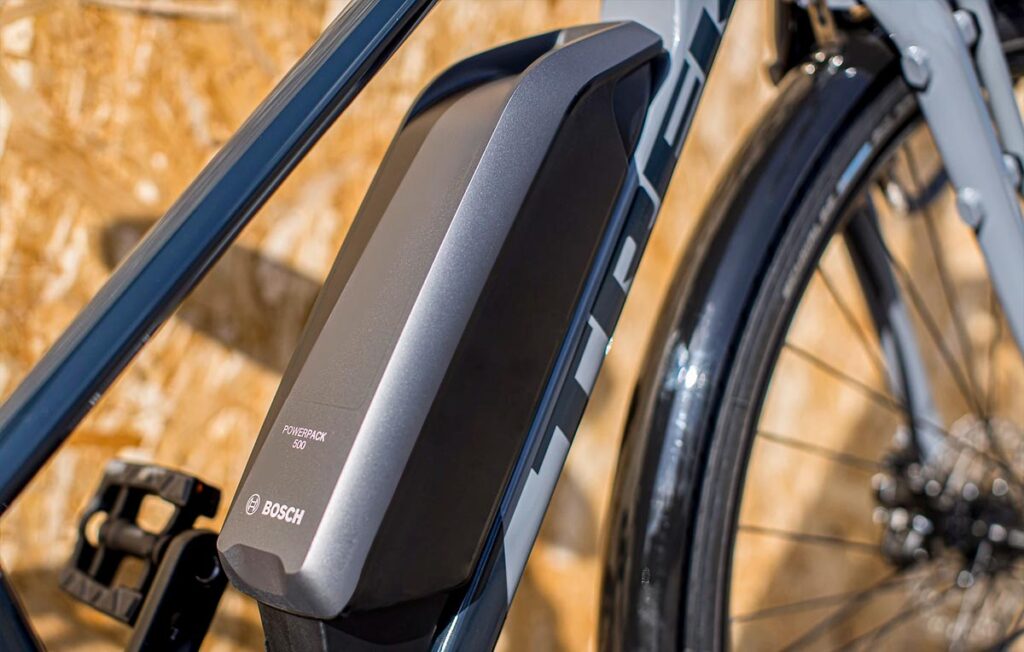
Bosch electric bike batteries are lithium-ion batteries. Lithium-ion batteries are also used in smartphones, electric cars and rechargeable tools. A typical electric bike battery has 40 to 60 cells. For comparison, one electric car has the equivalent of about 130 cells in an electric bike. This article discusses the characteristics and correct use of Bosch batteries.

Benefits
Bosch batteries have no “memory effect”. This means that charging is always as fast no matter what the battery charge level is when you start charging. An interruption in charging will not damage the battery and a full discharge is not required. Bosch batteries retain their charge excellently even over long periods of storage. For particularly long storage periods (e.g. over winter), it is recommended to keep the battery at a charge level of about 30-60 %. The Bosch BMS system monitors the battery's performance and charge, enabling a long and safe battery life.
Charging the battery
The Bosch battery can be charged while it is in place on the bike or it can be removed for charging. Charging should be carried out at room temperature in a dry place. If you use your e-bike in cold weather, store and charge the battery indoors. Only install the charged battery on the bike just before setting off.

Factors that extend battery life
- Low load (e.g. lighter gears, higher pedal speeds)
- Storage at 10-20 degrees Celsius
- Maintaining battery charge 30-60 % during long storage periods
- Parking your e-bike in a shady, cool place during the summer heat
Factors that shorten battery life
- High load (driving with high gear and engine revs=
- Storage at temperatures above 30 degrees Celsius
- Long-term storage in full or completely empty reserve mode
- Leaving an electric bike directly in the sunshine
- Repeatedly discharging the battery completely (full discharge)

Tips for maximising the action trip
Pedal cycles and right gear
Aim to keep the rotation speed above 50 rpm to optimise engine efficiency. Very slow, high gear pedalling puts a strain on the engine and increases power consumption. Match the selected gear to the terrain and to maintain an appropriate pedalling speed.
Loads
Try to keep the total weight of the bike and load as light as possible to save power.
Stops and accelerations
As with driving, moving at a steady pace is more economical than constant stops and starts. You can't always avoid them, but try to drive proactively.
Tyre pressures
By using the right tyre pressures, you minimise rolling resistance. If you want the longest possible operating range, use the highest pressures allowed by the tyre manufacturer for the tyre in question.
Temperature
A lithium-ion battery temporarily loses capacity in cold temperatures. This is perfectly normal. If you regularly drive in cold temperatures, you should consider protecting your battery with a suitable neoprene protector.
Security
Kennot
Each of the individual cells in a Bosch electric bike battery is protected by a durable steel cup inside a plastic or aluminium casing. The battery casing must not be opened. When handling the battery, avoid shocks, bumps, drops and high temperatures (including direct sunlight) - these can damage the battery and cause flammable material to leak out of the battery.


Downloading from
Bosch's integrated battery management system (BMS) prevents overcharging and protects the battery from short-circuits. Bosch e-bike batteries may only be charged using genuine Bosch chargers designed for this purpose. The battery should always be charged in a dry place. The battery must not be charged in the vicinity of heat sources or flammable materials. Always disconnect the battery from the charger when charging is complete.
Cleaning
The battery should be cleaned from time to time with a damp cloth. The battery should not be cleaned with a pressure washer or a direct water jet. The battery should be disconnected from the bike for washing. With the battery disconnected, carefully protect all visible electrical connections.
Transport
Lithium-ion batteries contain large amounts of energy, so care must be taken when transporting them. If possible, the battery should be charged to approximately 30 % during transport and the battery should only be fully charged after transport. If you transport your e-bike in a car-mounted rack, disconnect the battery from the bike and transport it inside the car in a safe place so that it cannot move while driving. Electric bicycle batteries must not be transported on board an aircraft.
Changing to a new one
Bosch e-bike batteries are wear parts and over time they lose their power. For safety reasons, you should not attempt to repair or “wake up” a “worn out” or damaged battery, but always recycle it properly and replace it with a new one. Your Bosch dealer can help you recycle an old battery.
Source: Bosch eBike Battery Guide: bosch-ebike.com