It's hard to think of any other innovation in recent years that has caused as much of a stir in the cycling world as the electrification of bicycles. And there is reason to be - the addition of the electric motor will make bicycles an increasingly popular form of transport and exercise. This article looks at the characteristics of electric bikes and offers tips on things to consider when choosing a bike.
What is an electric bike about?
This article deals with prefabricated electric assisted bicycles. These bicycles, which are classified as ordinary bicycles, do not go anywhere without the pedal power generated by the rider. Electric-only bicycles that look like bicycles are also on the market, but they are classified as non-bicycles.

So the electric bikes mentioned in this article are just like regular bicycles, but with an electric motor installed to assist at a set level, making pedalling lighter and your journey more leisurely. The maximum continuous maximum power of an electric assisted bicycle is 250 watts and it may assist up to a maximum speed of 25 km/h. You can, of course, ride your electric bike faster, but the motor will no longer assist you. The electric motor is powered by a separately rechargeable battery.
Engine types
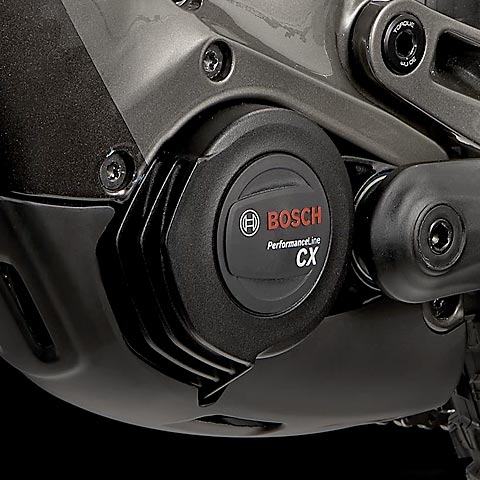
The motor of an electric-assisted bicycle can be mounted either on the frame (central motor), on the front hub or on the rear hub. The best-known manufacturers, such as Bosch, Shimano, Yamaha and Brose, produce virtually exclusively frame-mounted motors. One of the advantages of the centre motor is its position low down in the centre of the frame. The low centre of gravity is advantageous for the bike's rideability. In addition, the centre motor allows accurate measurement of pedal rotation and pedal pressure, among other things. Advanced engine systems use this information to automatically adjust the assist power to optimise engine behaviour and power consumption.
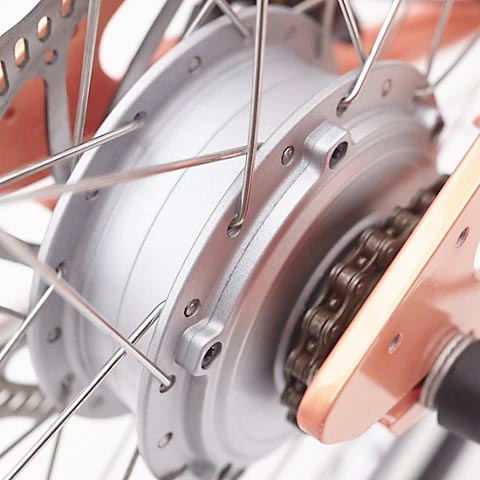
The rear-mounted motor is also able to measure the pedal rotations and the power produced by the pedal to adjust its operation. The rear hub motor is often used in bike designs where a discreet design is desired or where the overall weight is kept as low as possible. Good examples include Electra's cruiser electric bikes, which don't even look like electric bikes from the outside, or electric-assisted road and gravel bikes, where the lightness of the electric system is key. A front-mounted motor is usually seen on cheaper urban bikes. It is inexpensive to manufacture, but bikes with a front hub motor can suffer from a slightly sluggish ride, as they do not measure the pedalling effort generated by the rider.
Batteries for electric bicycles
The batteries used in electric bicycles are almost invariably lithium-ion batteries. Batteries are available in different capacities and the capacity naturally affects the operating distance an electric bike can achieve on a single charge. At the same time, the battery is one of the main factors influencing the price of an e-bike. The place where the battery is installed may vary. The battery may be integrated in the luggage rack, it may be mounted on the surface of the bottom tube of the frame or it may be hidden inside the frame.
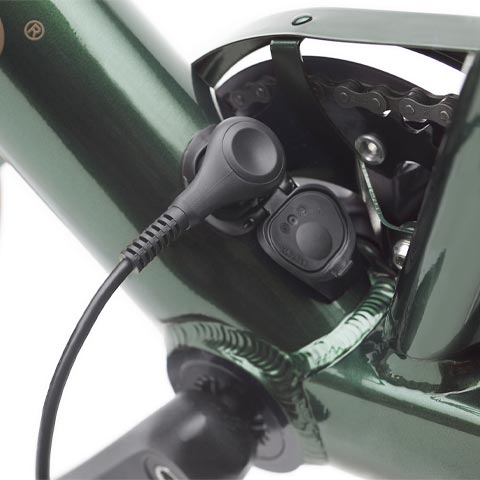
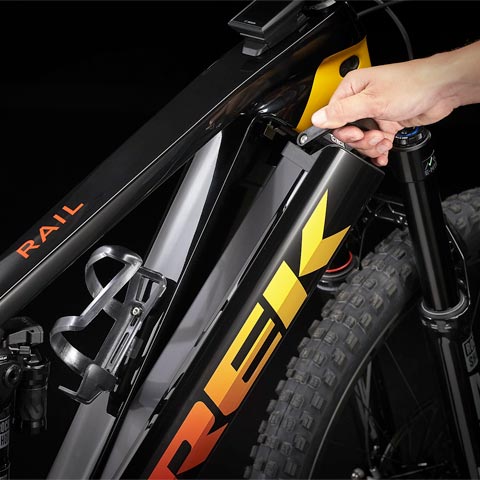
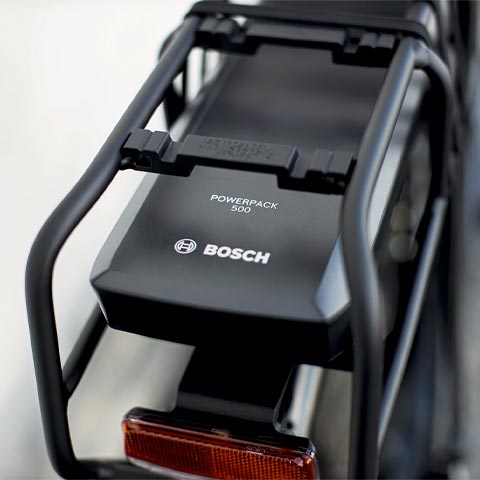
Almost regardless of the bike model, it is possible to charge the battery while the bike is stationary or to remove it for charging. How convenient it is to remove an integrated battery, for example, depends on the bike manufacturer and the bike model. The effective lifetime of the battery depends on the battery model, the conditions of use and the maintenance of the battery. Most manufacturers promise a 2-year or 500-1000 charge cycle warranty on their batteries. It is worth noting that the battery is not unusable after this period, it just does not reach its maximum capacity.
The size of the battery will depend on how you use your bike. The operating distance on a single charge is affected by so many factors that it is impossible to give an absolute operating distance for a particular bike model. Even with the lowest capacity batteries (300 Wh), you can ride for at least tens of kilometres. If you know you will be riding long distances, in hilly terrain, in cold weather or with a heavy load, you should choose as large a battery as your budget allows. If you're considering an e-bike with Bosch technology, you can use a handy calculator to test the impact of both battery size and a host of other variables on your mileage.
Driving facilities
Most e-bike systems allow you to choose between 3 to 5 different levels of assistance. The level you choose will of course affect how much extra power the motor produces to support your own legs. The motors are programmed according to the intended use of the bike. An urban electric bike user will probably appreciate the refined and jerk-free power delivery, while a mountain biker speeding through the woods will want the power on immediately when accelerating out of a corner.
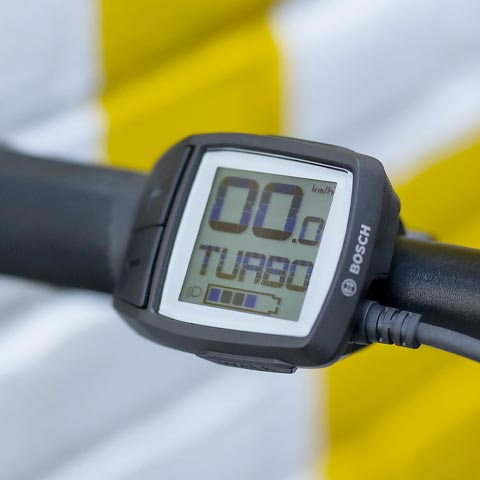
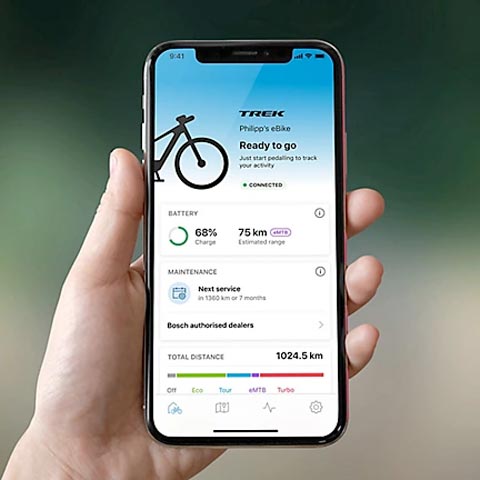
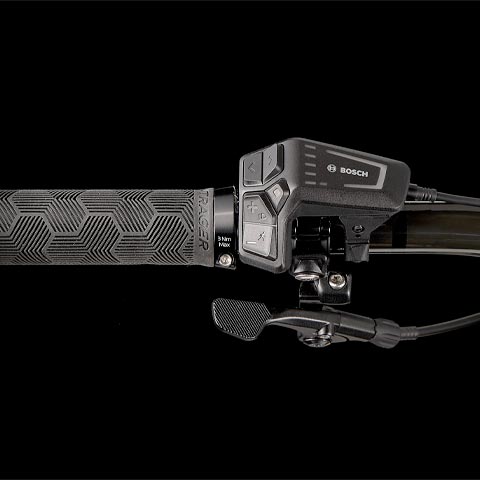
The choice of riding mode can also affect how the bike handles - even a fully assisted city bike can accelerate quite briskly through traffic lights. Some bike models allow you to customise the riding modes and their use with a smartphone app, while Bosch mountain bike engines, for example, have an intuitive EMTB mode that automatically adjusts engine power.
Choosing an electric bike
The same laws apply to the choice of an electric bike as to the choice of an “organic” bike. The very first thing to do is to determine the main purpose of the bike. Although you can ride a mountain bike on the street, it's not the best choice if you're only riding on asphalt. So think about where you ride, what conditions you ride in and whether you need to carry shopping, for example.
Electric mountain bikes
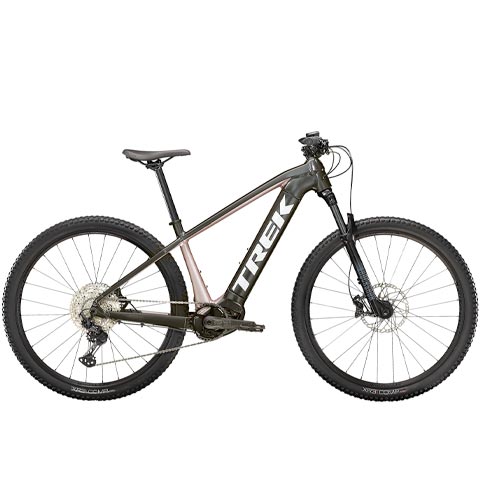
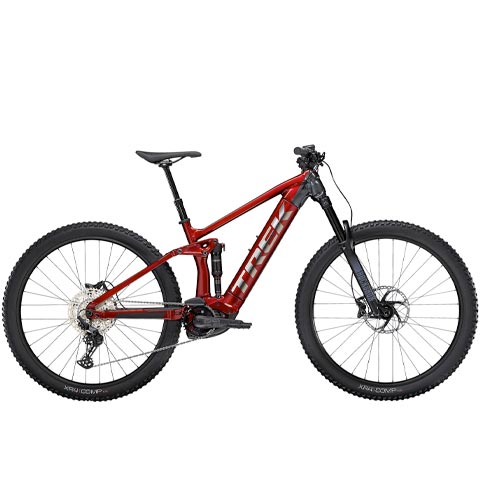
Like their non-motorised counterparts, electric mountain bikes are available for a variety of uses. And while it was mentioned above that a mountain bike may not be the best choice for everyday cycling, it can still be a good option - especially if you ride all year round or if you want to hit the trails at least occasionally. Bike manufacturers have also recognised the versatility of electric SUVs and have made available pre-equipped “city SUVs”. These equipped models are available in both front suspension and full suspension versions. Long-suspension, full-suspension enduro and trail SUVs are also available. The textured tyres and powerful engines of electric off-road bikes increase power consumption, so their batteries often have a higher capacity than those of, say, city bikes.
Electric city and hybrid bikes

A hybrid bike is, by definition, a true multi-purpose bike and electric assist only enhances its usability. If you're not quite sure what kind of electric bike to buy, a hybrid is a pretty safe bet - assuming you're not going off into the woods for a romp. The range of electric hybrid bikes includes everyday versions, more stripped-down sport models and cross hybrids with a suspension fork and wider tyres. All models are suitable for versatile riding - some with more emphasis on comfort and others on sportiness. Electric hybrid models are usually powered by urban engines from motor manufacturers, but there are also bikes with more powerful engines familiar from off-road bikes. Battery sizes for hybrids are usually between 300 and 500 watt-hours.
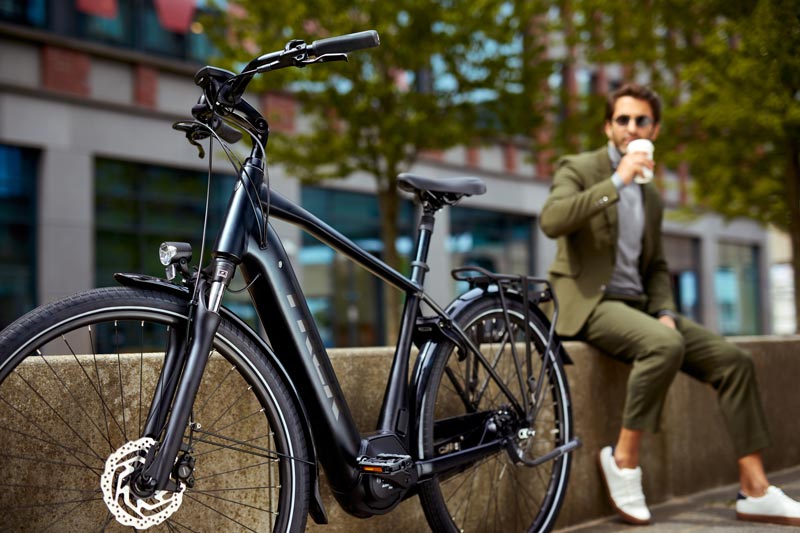
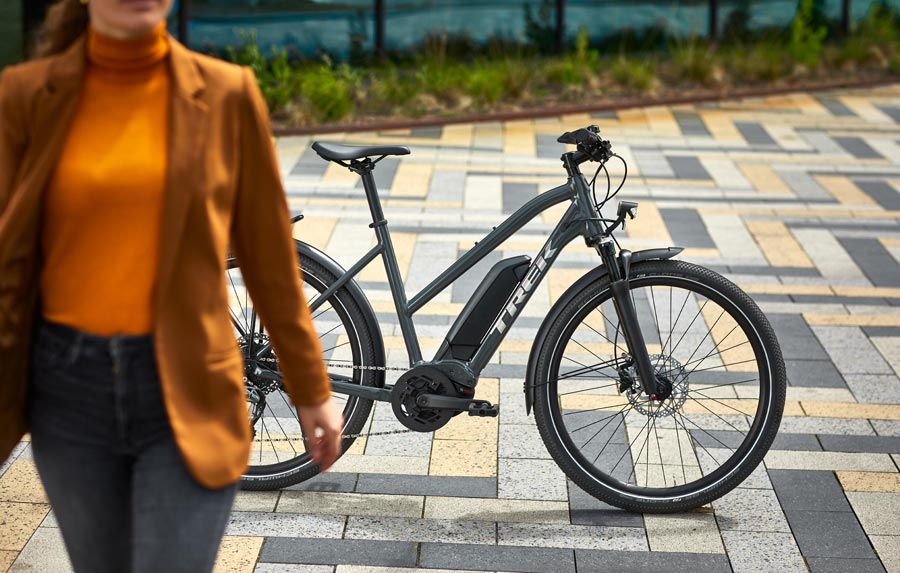
Fully equipped city electric bikes make everyday mobility easier. The upright and upright riding position is ideal for observing traffic and travelling comfortably. And with the help of an electric motor, the air resistance of the upright riding position is not a problem. Many city bikes have wide tyres so they are stable to ride and are also well suited to uneven surfaces. Electric city bikes are available both with external gearboxes and with hub gearboxes, which are particularly popular in the Nordic countries. In many urban models, the lockable battery is housed in the rear rack, making it easy to take it with you for charging. As with electric hybrids, city electric bikes are available with a range of battery capacities.
Electric road and gravel bikes
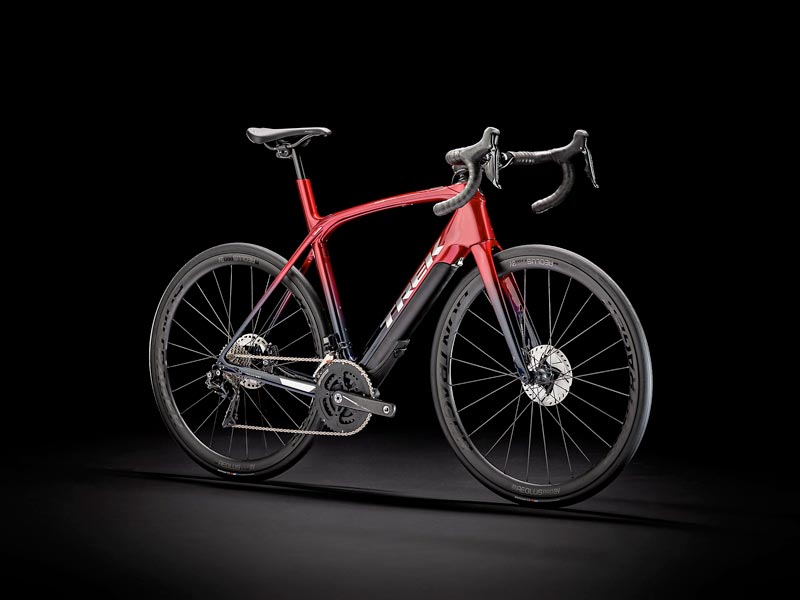
Sport e-bikes are slightly different from other types of e-bikes. The main focus of electric road and gravel bikes is to keep the bike as natural-feeling and light as possible. The idea behind many of these models is to ride most of the ride without electricity and use the assist where it is needed most, on the steepest hills and on hard headwinds. That's why you rarely find the most powerful motors or the biggest batteries on these models. Similarly, the presence of a motor is barely noticeable when it is not in use.