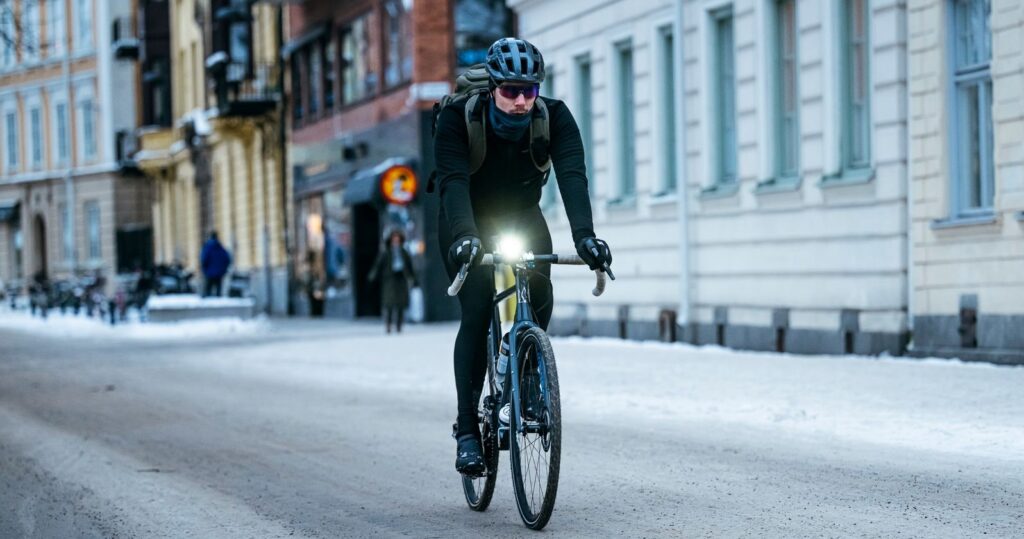
Yes, you can ride a bicycle in winter in Finland. Winter cycling is legal and allowed all year round, as long as you obey traffic laws and use the right equipment. The right winter tyres, adequate lighting and safe driving are key to safe winter cycling. This guide covers all the essentials for getting started with winter cycling.
Is it legal to ride a bicycle in winter in Finland?
It is perfectly legal to ride a bicycle in winter in Finland. The Road Traffic Act does not impose any specific restrictions on cycling in winter, and cyclists have the same rights to use cycle paths and the right-hand edge of the carriageway all year round.
However, in winter conditions, cyclists should pay particular attention to safety. The bike must be properly lit at dusk and dawn, and the riding style must be appropriate to the conditions. Right of way also applies to cyclists - on slippery and dangerous stretches, you can safely pedal your bike along the footpath.
The rules for cycling on cycle paths remain the same in winter, but maintenance may vary. Many municipalities plough and sand the main cycle paths, but not all routes may be maintained as efficiently as in summer. It is the cyclist's responsibility to assess the safety of the route and choose the route accordingly.
What tyres are needed for winter cycling?
Winter cycling requires special tyres that provide adequate grip on slippery surfaces. Studded tyres on the wheel are the most effective solution on icy roads, as metal pin fastenings provide excellent grip on hard ice and in freezing rain.
The main types of winter tyres are studded and friction tyres. Studded tyres contain small metallic studs, which bite into the ice and provide maximum safety. In contrast, friction tyres rely on a special rubber compound and groove patterns that work well on snow and wet surfaces, but are less effective on hard ice.
The criteria for tyre selection depend on driving conditions. If your route is often covered in ice, studded tyres are the best choice. In softer winter conditions, friction tyres may suffice and are quieter when driving on asphalt. Tyre width also matters - wider tyres distribute weight better in snow, while narrower ones bite deeper and reach the ground better.
How does an electric bike work in winter?
The e-bike works in winter, but battery performance is reduced in the cold. Lithium-ion batteries lose capacity as the temperature drops, and at -10°C below zero, operating time can be reduced by up to 30-50%. However, the battery will return to normal operation as it warms up.
Electric bike battery storage is critical in winter. The battery should be stored indoors at room temperature and installed on the bike only after riding. If the battery gets cold, allow it to warm up to room temperature before charging. In extreme cold, the battery may refuse to operate altogether to protect itself from damage.
Practical tips for using an e-bike in winter: use lower assistance levels to save battery power, keep the battery warm during your ride by keeping it in your pocket during breaks, and have a back-up plan if you run out of battery power mid-ride. In winter, it's also a good idea to check that all electrical connections are clean and dry.
What equipment do you need for winter cycling?
Essential winter cycling equipment includes proper lighting, warm and windproof clothing and safety equipment. You must have working lights on the front and back of your bike, as winter days are short and visibility is often poor.
Cyclists should be equipped with warm, breathable layers of clothing, a windproof jacket, warm gloves and good footwear. A helmet is recommended all year round, and especially in winter when the risk of slipping is higher. Reflectors and visible colours improve safety at night.
You should add mudguards to your bike to prevent snow and slush from splashing. Chain guards keep the transmission cleaner, and good brakes are essential for a safe stop. Also keep a small repair kit and pumps on the bike, as tyre pressures drop faster in the cold.
How do you maintain your bike in winter?
Winter bike maintenance requires special attention, as moisture, salt and dirt put more stress on parts than normal. Regular cleaning and lubrication of the chain is the most important thing - the chain should be cleaned and lubricated at least once a week during active winter use.
Brakes need special monitoring in winter. Check brake pads and discs regularly, as sand and salt wear them down more quickly. Gears can freeze or get dirty, so it is important to adjust and clean them to ensure smooth operation.
General maintenance includes washing the bike in salt water after riding, drying it thoroughly and checking all moving parts. If possible, store the bike in a dry and warm place. If this is not possible, allow the bike to thaw and dry before the next use to prevent ice from forming on sensitive parts.
Winter cycling is not only possible, but also enjoyable when you have the right equipment and maintenance. The right tyres, adequate lighting and regular maintenance ensure a safe and comfortable cycling experience all winter long. Remember that winter conditions vary from day to day, so always be prepared for the conditions and don't hesitate to pedal your bike in the most difficult spots.